


Building Speed Beyond the Ice
How one club is growing community, developing athletes, and embracing technology in sport
By Paul Emblin

When my kids were young, we took skating lessons, like many Canadians do. The lifecycle often becomes: you take the lessons, you finish them, and then it becomes a question of, “what do you want to do next?” or, “do you want to join hockey?” For some, the answer is, “neither.”
I thought, okay, if some kids are not team athlete oriented, what are we going to do during the winter season? I happened to be beside a speed skating poster at the time, and I was inclined have my kids try that sport. It took a couple of tries, to be honest, but once we got in there with the initial club foundation, we were really drawn to the sport and the people.

Shortly after we joined, I became club president. I’ve enjoy driving the club forward with a clear vision to make this experience as big as possible in the community and to give people a chance to try something that’s not hockey or figure skating. Now, my mission has gone beyond that and expanded to be a leader in this sector using technology in the sport.
The club is now pretty much self-sustaining. If I were to step away, generally speaking, it would continue as is. The next goal is to lead in using technology. If you go out west to Calgary, the flagship venue uses it because it was built into the infrastructure. Which leads me to ask the question, “how do you replicate that?”

We’ve purchased electronic timing equipment and a camera we can use for events. We also recently purchased a lap counter and transponders installed in the ice so we can use them during practice. Doing so allows the kids to instantly see how many laps they’ve done, what their pace is, and where to improve.
That instant feedback matters. The coaches used to keep track of this manually in previous seasons, but it was unsustainable. Now it’s visual.
I like being in a leadership position where we can meet with people, come up with ideas, and then make those ideas a reality - whether programs or fundraising initiatives. A lot of people have good ideas, but they need a push to get started or don’t know how to begin. What I really enjoy is enabling others to succeed in their areas of leadership.
Our biggest challenge is awareness: getting our organization out there and more eyes on our logo. Right now, we serve approximately 50 active skaters, and we’ve had about 100 come through to try speed skating.
Our lifecycle is that newcomers try a few sessions and don’t always continue, which is fine. Of the 50 retained members, some have gone on to race professionally. Our next step is to grow operationally so we can afford additional hours of ice time each week.
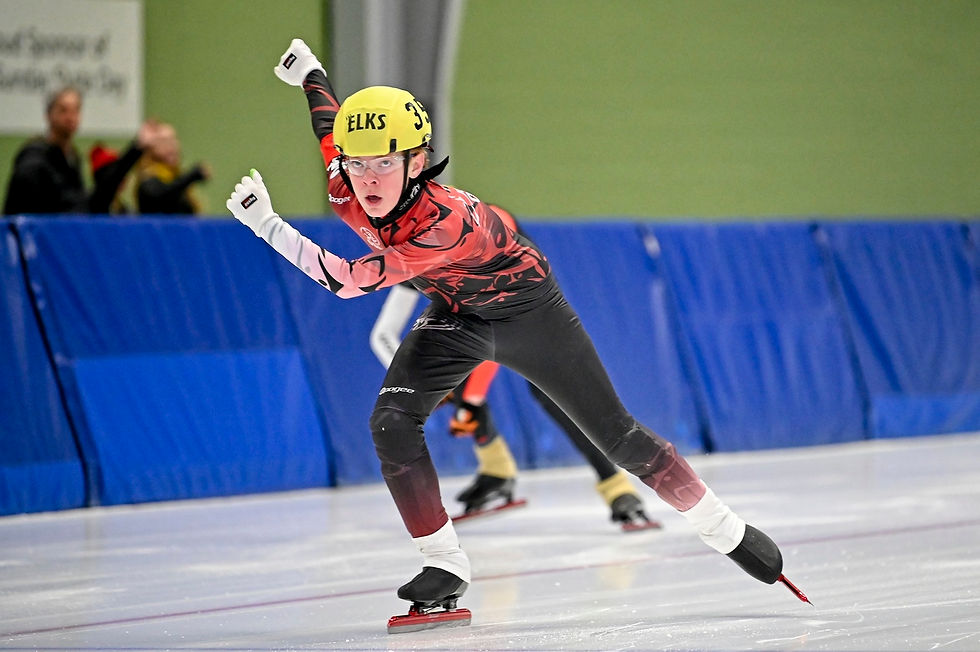
To do that, we would need approximately 20 new memberships. Our recruiting strategy is ads through Facebook and local town signs. Once people come through the door, we run a three-week intro program and aim to convert them into members. We also use surveys to understand what’s working and what’s not, and plan strategically from that feedback.
That said, those who stay tend to step up and volunteer fairly quickly, whether in fundraising or events, which is fantastic.
When considering What we would want or need from the community to make our next steps successful, I consider the value Volunteer Connector has been for us – it’s a godsend. We use it heavily for events. We bring in a small army of student volunteers for our racing events. Previously, I had to reach out to every high school and hope for the best. With Volunteer Connector, I can put out a call and get the people we need.
If I dream big, we could build an Olympic oval: a board-less rink with padding instead of hockey boards. That would attract talent striving for the national and international stage.

Right now, our arenas are on the smaller scale. Once you reach a certain speed and skill level, you must move elsewhere for additional training. When we have a facility designed specifically for speed skating, people will come. Our aim is to become the main hub in Ontario for developing athletes to compete nationally and internationally.
Story curated by Phillip McAllister
_________________________________________________________________________
This post is part of a larger CDH Member Story Project. The intent is to share the depth of our non-profit sector, name how community can support and imagine together what is possible through the non-profit sector to ensure Halton is a health, inclusive and resilient place to live.
Are you a CDH member and want to let your story to the project. You can get started HERE.


Comments